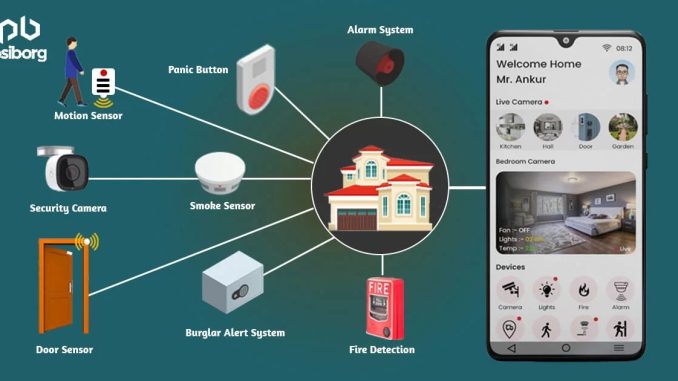
The concept of a “smart home” has evolved rapidly from a futuristic pipe dream into a tangible reality, seamlessly woven into the fabric of modern living. At the heart of this transformation lies the Internet of Things (IoT), a vast network of interconnected devices, sensors, and software that communicate and share data, enabling a level of automation, efficiency, and intelligence previously unimaginable within our residential spaces. Far from being mere novelties, IoT devices are fundamentally reshaping our homes, making them not only more convenient and energy-efficient but also significantly safer, providing homeowners with unprecedented control and peace of mind.
One of the most immediate and appreciated impacts of IoT in the home environment is the enhanced **convenience and automation** it provides. Smart lighting systems, for instance, can be controlled remotely via a smartphone, scheduled to adjust based on natural light, or even respond to your presence. Smart thermostats learn your preferences and optimize heating and cooling, not just saving energy but also ensuring comfort upon arrival. Voice-activated assistants, connected to various smart devices, allow for hands-free control of entertainment, appliance operation, and even information retrieval, transforming how we interact with our living spaces. Imagine arriving home to lights automatically adjusting to your preferred ambiance, the temperature perfectly set, and your favorite music gently playing – all orchestrated by an intelligent home system that anticipates your needs. This level of automation streamlines daily routines, freeing up time and cognitive load for more meaningful pursuits.
Beyond mere convenience, IoT is revolutionizing **home security and safety**. Traditional security systems, while effective, often rely on manual arming and disarming and offer limited real-time insights. Smart security cameras, equipped with motion detection and facial recognition, can send instant alerts to your phone if unusual activity is detected, even allowing for two-way audio communication with visitors or intruders. Smart door locks can be controlled remotely, granting access to trusted individuals even when you’re away, and providing a digital log of who enters and exits. Integrated sensors can detect open windows or doors, adding another layer of perimeter defense. For example, if a child inadvertently leaves a door ajar, a notification can be sent immediately, averting potential accidents.
The preventative safety measures afforded by IoT devices extend well beyond conventional security. Smart smoke and carbon monoxide detectors, unlike their traditional counterparts, can not only alert occupants with an audible alarm but also send notifications directly to your smartphone, alert emergency services automatically, and even pinpoint the exact location of the danger within your home. Leak detection sensors, strategically placed near water heaters, washing machines, or pipes, can detect even small leaks early, sending alerts that allow for timely intervention before minor drips escalate into catastrophic floods, saving homeowners thousands in potential repair costs and preventing extensive property damage. Similarly, smart garage door openers can alert you if the door is left open and allow you to close it remotely, preventing security vulnerabilities and protecting against environmental elements.
Moreover, IoT plays a crucial role in **energy efficiency and resource management**, which indirectly contributes to both comfort and long-term savings. Beyond smart thermostats, connected appliances such as refrigerators, washing machines, and dishwashers can be programmed to operate during off-peak energy hours, reducing utility bills. Smart irrigation systems utilize local weather data to water lawns only when necessary, conserving water. Energy monitors can provide granular data on electricity consumption, empowering homeowners to identify energy vampires and adopt more sustainable habits. This intelligent management of resources not only benefits the environment but also provides tangible financial advantages, demonstrating the practical value of a truly smart home.
The interoperability between different IoT devices, facilitated by common protocols and unified smart home platforms, is continuously improving, leading to a more cohesive and intuitive user experience. Devices from different manufacturers can increasingly “talk” to each other, allowing for complex automations and integrated scenarios. For instance, a smart home hub can be programmed so that when a smoke detector senses an alarm, all smart lights automatically turn on, smart locks unlock, and a fan turns on to clear smoke – all without human intervention. This level of sophisticated, integrated response is a hallmark of an advanced IoT ecosystem.
However, the proliferation of connected devices also introduces new considerations regarding **data privacy and cybersecurity**. Every connected device generates data, and understanding how this data is collected, stored, and used is paramount. Homeowners must be diligent in securing their Wi-Fi networks, using strong, unique passwords for all smart devices, and regularly updating firmware to protect against vulnerabilities. Choosing reputable brands with strong privacy policies and security track records is also crucial. The convenience of a smart home must be balanced with a proactive approach to protecting personal information from potential breaches.
In conclusion, the Internet of Things is fundamentally reshaping the residential landscape, transforming ordinary houses into intelligent, responsive homes. By seamlessly connecting devices, enabling sophisticated automation, and providing real-time monitoring capabilities, IoT is not just making our daily lives more convenient and energy-efficient but also significantly enhancing the security and safety of our living spaces. From proactive alerts about potential dangers to remote control over essential home functions, the connected home offers an unprecedented level of control and peace of mind. As the technology continues to mature and integrate more deeply, the smart, safe, and truly intelligent home will become not just a luxury, but an expected standard of modern living.