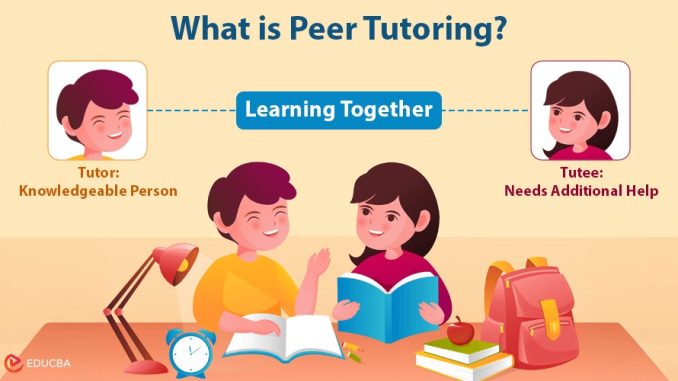
In the dynamic landscape of education and skill development, traditional pedagogical approaches often focus on the singular relationship between an instructor and a learner. However, a potent and increasingly recognized methodology, peer tutoring, offers a compelling alternative and supplementary pathway to enhanced understanding and mastery. Far from being a mere stand-in for professional instruction, peer tutoring harnesses the unique power of collaborative learning, fostering an environment where students teach and learn from one another. This symbiotic relationship yields a multitude of benefits, not only for the tutee seeking assistance but also, perhaps surprisingly, for the tutor themselves, creating a virtuous cycle of academic and personal growth.
One of the most immediate and tangible benefits of peer tutoring for the tutee lies in the **accessibility and relatability of the explanation**. A peer, having recently navigated similar learning challenges, often possesses a more intuitive grasp of where a fellow student might struggle. They can simplify complex concepts, rephrase explanations in more relatable language, and offer analogies that resonate directly with a student’s current understanding, free from the often-intimidating authority of a formal teacher. For instance, a high school student grappling with a complex algebra problem might find a peer’s explanation, phrased in everyday terms and demonstrating a similar thought process, far more illuminating than a textbook definition or a teacher’s lecture. This shared cognitive space allows for a more comfortable and less intimidating learning environment, encouraging questions that might otherwise remain unasked in a larger classroom setting. The psychological safety offered by a peer relationship often emboldens students to vocalize their confusion, leading to more targeted and effective support.
Beyond simplified explanations, peer tutoring significantly contributes to **enhanced understanding and retention of material**. The act of teaching itself is a powerful learning tool. When a peer tutor explains a concept, they are forced to articulate their knowledge clearly, organize their thoughts logically, and identify potential gaps in their own understanding. This process of active recall and articulation solidifies their grasp of the subject matter, transforming passive knowledge into deeply embedded expertise. Consider a university student who tutors a classmate in economics. In preparing to explain concepts like supply and demand or macroeconomic indicators, the tutor must revisit and clarify their own understanding, often gaining new insights in the process. This meta-cognitive engagement—thinking about one’s own thinking—leads to a more robust and nuanced comprehension for the tutor, while the tutee benefits from a coherent and well-structured lesson tailored to their specific needs.
Furthermore, peer tutoring cultivates crucial **interpersonal and communication skills** for both parties. For the tutor, it hones their ability to convey ideas clearly, adapt their communication style to different learning needs, and practice patience and empathy. They learn to diagnose learning difficulties, provide constructive feedback, and motivate their peers—skills highly transferable to future leadership roles, team collaborations, and professional presentations. For the tutee, engaging with a peer tutor often improves their ability to articulate their questions, listen actively, and collaborate effectively. These are not merely academic skills; they are vital life skills that foster greater confidence in interacting with others, seeking help when needed, and participating in group settings. The informal nature of peer interactions often makes it easier to practice these skills without the pressure associated with formal assessments.
Another significant benefit is the **boost in confidence and self-efficacy** experienced by both the tutor and the tutee. For the tutee, successfully grasping a challenging concept with a peer’s help instills a sense of accomplishment and diminishes feelings of inadequacy. This newfound confidence can then ripple into other areas of their academic life, encouraging them to tackle new challenges. For the tutor, the experience of successfully guiding a peer to understanding is immensely empowering. It validates their own knowledge and capabilities, reinforcing their self-belief and potentially inspiring them to pursue further leadership or educational roles. This reciprocal boost in confidence creates a positive feedback loop, strengthening the desire for continued learning and contribution within the peer community.
Finally, peer tutoring programs foster a strong sense of **community and mutual support within educational environments**. They break down traditional hierarchies and promote a culture where students feel comfortable supporting one another rather than viewing learning as a solitary, competitive endeavor. This collaborative ethos can reduce academic stress, build camaraderie, and create a more inclusive learning atmosphere where everyone feels invested in collective success. In a business context, this translates into teams that are more willing to share knowledge, mentor junior colleagues, and collectively problem-solve, leading to enhanced innovation and productivity. The establishment of formal or informal peer tutoring initiatives within schools, universities, or even professional training programs underscores a recognition that learning is a profoundly social activity, and that some of the most profound insights arise from interactions with those walking a similar path.
In conclusion, the benefits of peer tutoring extend far beyond immediate academic gains. It is a powerful pedagogical tool that enhances understanding and retention for both parties, cultivates essential communication and interpersonal skills, significantly boosts confidence and self-efficacy, and strengthens the overall fabric of a learning community. By leveraging the inherent wisdom and shared experience within a peer group, educational institutions and organizations can unlock a rich, often untapped, resource, fostering an environment where learning is not just effective but also deeply engaging and mutually enriching.