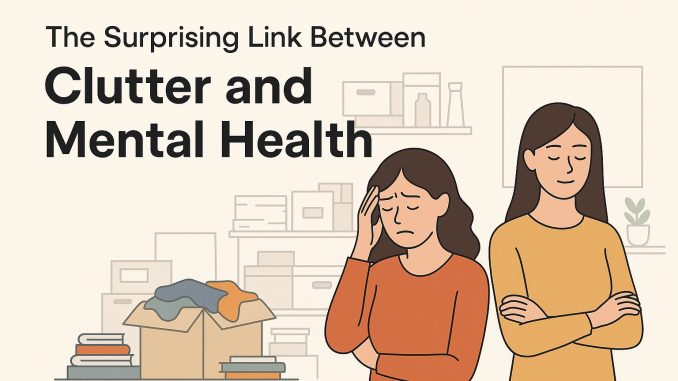
Clutter is often seen as a purely aesthetic issue, a matter of whether a home or office looks orderly. Yet research and lived experience suggest that clutter reaches far deeper than appearances, influencing how we feel, how we think, and even how our bodies respond to stress. The connection between clutter and health is subtle but powerful, intertwining psychological, emotional, and physical dimensions of well-being. For professionals managing high-pressure roles, clutter can act as an invisible weight, draining energy and focus without ever being directly acknowledged. Understanding the impact of our environments helps explain why decluttering is not simply a design choice but a health strategy.
One of the most immediate ways clutter affects health is through its impact on stress. Visual chaos sends constant reminders of unfinished tasks, creating a sense of being surrounded by demands. When a desk is piled high with papers or a kitchen counter is stacked with dishes, the brain perceives it as unresolved work. This low-level stress response, while subtle, accumulates over time, raising cortisol levels and increasing mental fatigue. In professional life, where attention is already taxed by competing priorities, clutter adds another layer of distraction. It becomes harder to focus deeply, and decision-making begins to feel more draining. In this sense, clutter is not just an annoyance—it actively contributes to cognitive overload.
The emotional impact of clutter is equally significant. Environments filled with excess items often evoke feelings of guilt or shame, whether from holding onto things that no longer serve us or from not having the time to organize. These emotions can erode self-esteem and create an undercurrent of dissatisfaction. On the other hand, environments that are thoughtfully arranged and free of unnecessary excess tend to foster a sense of calm and control. Professionals who walk into an uncluttered office in the morning often describe feeling more capable and composed, while those who enter disorganized spaces may begin the day already burdened. The emotional tone set by the environment ripples outward, shaping the way challenges are approached and handled.
Clutter also affects physical health in direct ways. Piles of belongings can collect dust, mold, and allergens, aggravating respiratory issues and contributing to poor indoor air quality. For individuals with asthma or allergies, cluttered environments can worsen symptoms and reduce overall vitality. Beyond that, cluttered spaces can also contribute to accidents, from tripping hazards at home to misplaced items that cause disruptions in daily routines. The physical risks of clutter may not always be dramatic, but over time, they create conditions that undermine resilience. A cleaner, more organized environment does not just feel better—it also supports healthier breathing, movement, and safety.
Sleep quality is another area where clutter exerts surprising influence. Studies have shown that people who sleep in cluttered rooms report more difficulty falling asleep and staying asleep. The brain processes visual cues even at rest, and an environment filled with chaos sends signals of disorder and unfinished business. For busy professionals, this connection is critical because poor sleep directly impacts performance, mood, and long-term health. Creating an uncluttered bedroom environment can therefore serve as a simple but powerful tool for improving rest, reinforcing the broader link between environment and health outcomes.
Clutter also intersects with productivity and time management. Misplaced items lead to wasted minutes searching for keys, documents, or tools, creating unnecessary stress and inefficiency. These micro-frustrations accumulate and can make the difference between feeling in control of the day and feeling constantly behind. Professionals often underestimate the mental tax of disorganization, assuming it is simply a matter of preference, but the evidence suggests otherwise. An organized environment reduces friction, streamlines workflows, and frees up cognitive energy for higher-level tasks. In this way, reducing clutter is not just about creating calm but also about optimizing performance.
Beyond the practical, clutter has a symbolic dimension that influences how people relate to themselves. Holding onto items from the past, for example, can keep individuals emotionally tethered to outdated identities or regrets. This can quietly affect motivation and confidence, making it harder to embrace new opportunities. Decluttering, by contrast, often brings a sense of renewal and possibility, as if clearing space physically creates room for growth. Professionals navigating career transitions or new projects may find that addressing clutter is an unexpectedly effective way to mentally prepare for change.
Importantly, the relationship between clutter and health is not about striving for perfection. A sterile, overly rigid environment can be just as stressful as one filled with disorder. The goal is to create spaces that feel supportive rather than overwhelming, that reflect intentionality rather than neglect. For some, this may mean minimalism; for others, it may simply mean ensuring that everyday items are organized and purposeful. The most important factor is the sense of control—knowing where things belong and creating a rhythm of maintaining order that reduces background stress.
Ultimately, clutter is more than a matter of tidiness. It is an environmental factor that shapes stress, emotion, physical health, sleep, and productivity. For professionals seeking to perform at their best, ignoring its impact means overlooking a subtle but significant barrier to well-being. By addressing clutter with the same seriousness applied to diet, exercise, or stress management, individuals can create spaces that enhance clarity, calm, and resilience. A thoughtfully organized environment becomes not just a backdrop but an active contributor to health, demonstrating that the way we shape our surroundings directly influences the way we feel and function.