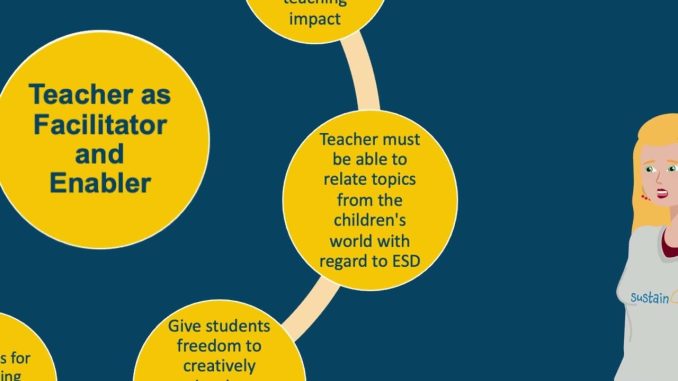
For much of history, teaching has been associated with the image of a lecturer standing before a room, imparting knowledge to students who dutifully absorb it. This model, though still prevalent, is increasingly being reexamined in light of changing educational needs and the evolving nature of work. Today, information is widely accessible, and learners can find explanations for almost any concept with a few clicks. What they need from teachers is not just information, but guidance in how to interpret, question, and apply it. This shift positions teachers less as lecturers and more as facilitators, individuals who create the conditions for learning to take place rather than simply delivering content.
The role of a facilitator is fundamentally different from that of a traditional lecturer. While lecturing emphasizes one-way communication, facilitation encourages dialogue, exploration, and critical thinking. In this model, the teacher acts as a guide who structures the learning environment, poses thought-provoking questions, and provides support as students engage actively with material. The goal is not to dictate conclusions but to help learners arrive at their own insights. For example, rather than lecturing on the principles of leadership, a facilitator might organize a case study discussion where students debate real-world dilemmas, drawing lessons that are both intellectually rigorous and personally meaningful. This kind of active engagement deepens understanding and makes learning stick.
The facilitator model also acknowledges that learning is not a uniform process. Every student brings different experiences, strengths, and challenges into the classroom. A lecturer delivering a one-size-fits-all presentation may reach some students while leaving others behind. A facilitator, by contrast, adapts to these differences, creating multiple pathways for learners to connect with the material. This could involve group discussions, hands-on activities, or individualized feedback, each tailored to the needs of the participants. The result is a learning experience that feels inclusive and empowering, where students are not passive recipients but active contributors.
This approach has clear parallels in business and leadership. In organizations, managers who act as facilitators often achieve better results than those who rely solely on top-down directives. By encouraging collaboration, asking questions, and creating space for employees to share ideas, they build teams that are more engaged and innovative. The classroom is no different. When teachers shift from lecturing to facilitating, they foster environments where creativity, collaboration, and problem-solving thrive—skills that are highly relevant to modern workplaces. In this sense, the teacher as facilitator not only enhances education but also prepares students for the collaborative realities of professional life.
Technology has accelerated the need for this transformation. With access to online lectures, recorded talks, and digital resources, students can obtain content on their own time. What they cannot get from technology alone is the nuanced guidance that comes from human interaction. Teachers as facilitators add value by helping students sift through information, evaluate credibility, and connect ideas across disciplines. They also create opportunities for learners to apply concepts in real-world contexts, whether through projects, simulations, or discussions that demand critical thinking. This human element cannot be replicated by even the most sophisticated technology, underscoring the continued importance of the teacher’s role—just one that has evolved.
Another critical dimension of facilitation is the emphasis on reflection. In traditional lectures, the focus is often on covering as much material as possible within a limited time. Facilitation, however, values depth over breadth. It encourages learners to pause, reflect, and consider how knowledge connects to their own experiences and goals. For instance, after completing a project, a facilitator might guide students through a debrief session, asking what worked, what didn’t, and what lessons can be carried forward. This reflective process reinforces learning and develops metacognitive skills—the ability to think about one’s own thinking—which are essential for lifelong growth.
The shift to facilitation also redefines the relationship between teacher and student. Rather than being seen as an authority figure whose role is to dispense knowledge, the teacher becomes a partner in the learning process. This does not mean that expertise is irrelevant; facilitators still provide structure, clarity, and expertise. But instead of positioning themselves as the sole source of truth, they create space for learners to explore and even challenge ideas. This dynamic builds trust and fosters confidence, as students feel their voices matter and their perspectives are valued. Over time, this approach cultivates independence, equipping learners to take ownership of their education rather than relying solely on external direction.
Critics of the facilitator model sometimes argue that it lacks rigor, suggesting that without direct instruction, students may miss essential knowledge. In practice, however, effective facilitation strikes a balance between structure and freedom. The teacher still introduces key concepts and ensures that learning goals are met, but does so in ways that invite active participation and deeper exploration. A science teacher, for example, might explain the fundamentals of an experiment before encouraging students to design and conduct their own variations. This balance preserves academic rigor while empowering students to develop critical skills that pure memorization cannot provide.
Ultimately, the teacher as facilitator reflects a broader understanding of what education should achieve. It is no longer sufficient to prepare students to recall facts or follow instructions; the goal is to prepare them to think critically, solve complex problems, and collaborate effectively. In this environment, the teacher’s role expands beyond that of a lecturer to that of a mentor, guide, and catalyst for growth. Students emerge not only with knowledge but with the confidence and skills to apply it in real-world settings.
This evolution is not about diminishing the role of the teacher but about amplifying it. Facilitators create learning experiences that are more engaging, inclusive, and relevant to the challenges of today’s world. They recognize that information alone does not equal understanding, and that learning is most powerful when it is interactive, reflective, and connected to real life. By embracing the role of facilitator, teachers ensure that their impact goes far beyond the classroom, shaping learners who are curious, capable, and ready to contribute meaningfully to the world around them.