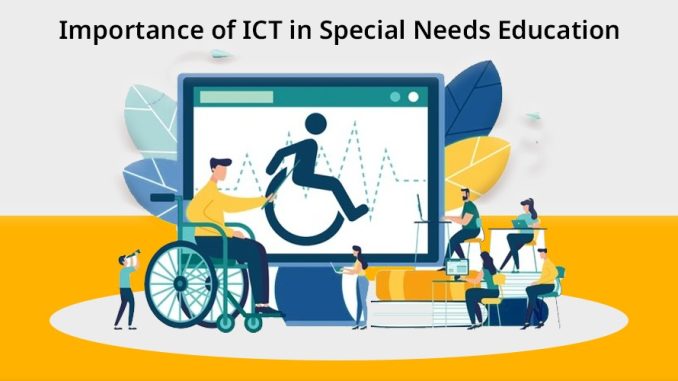
Technology has become a transformative force in education, and nowhere is its impact more profound than in the realm of special education. For decades, educators and families have grappled with how to best support students with diverse learning needs, often constrained by limited resources and rigid systems. Today, digital tools and platforms are reshaping that landscape, offering personalized, flexible, and scalable solutions that empower both learners and educators. The role of technology in special education is not simply about convenience—it’s about equity, access, and unlocking potential that might otherwise remain untapped.
At the heart of this transformation is the ability of technology to personalize learning experiences. Students with special needs often require tailored approaches that accommodate their unique cognitive, sensory, or physical challenges. Traditional classrooms, with their one-size-fits-all structure, can inadvertently marginalize these learners. Technology changes that equation by enabling adaptive learning environments. For example, speech-to-text software allows students with dyslexia to express themselves without the barrier of written language, while screen readers open up digital content to those with visual impairments. These tools don’t just level the playing field—they redefine it, allowing students to engage with material in ways that align with their strengths.
The integration of technology also enhances communication, which is a cornerstone of effective special education. Many students with developmental or speech-related challenges struggle to express their thoughts and needs. Augmentative and alternative communication (AAC) devices, ranging from simple picture boards to sophisticated apps, provide these students with a voice. In business terms, this is akin to removing bottlenecks in a workflow—when communication flows freely, collaboration improves, and outcomes accelerate. Teachers can better understand student needs, parents can stay informed, and students themselves gain agency over their learning experience.
Beyond individual tools, technology facilitates data-driven instruction. In special education, progress can be nuanced and nonlinear, making traditional assessment methods insufficient. Digital platforms allow educators to track student performance in real time, identify patterns, and adjust strategies accordingly. This kind of responsive teaching mirrors the agile methodologies used in business, where feedback loops and iterative improvements drive success. When teachers have access to actionable data, they can make informed decisions that support growth, rather than relying on assumptions or outdated models.
Professional development is another area where technology plays a pivotal role. Special education requires specialized knowledge, and ongoing training is essential. Online courses, webinars, and virtual communities provide educators with access to expertise that might not be available locally. This democratization of knowledge ensures that teachers can stay current with best practices, legal frameworks, and emerging research. It also fosters a culture of continuous improvement, which is critical in a field where the stakes are high and the challenges are complex. Just as business professionals rely on upskilling to remain competitive, educators use technology to refine their craft and better serve their students.
The collaborative potential of technology cannot be overstated. Special education often involves a team of stakeholders—teachers, therapists, administrators, and families—working together to support a student’s development. Digital platforms streamline this collaboration, enabling shared access to plans, progress reports, and communication logs. This transparency builds trust and ensures that everyone is aligned. In a business context, this would be akin to a well-integrated project management system, where visibility and coordination lead to more effective execution. When all parties are informed and engaged, the support system becomes more cohesive and responsive.
Of course, the implementation of technology in special education is not without its challenges. Equity remains a concern, as not all schools or families have access to the necessary devices or internet connectivity. Additionally, technology must be used thoughtfully—it should enhance, not replace, human interaction. The relationship between teacher and student is still central, and digital tools should serve to strengthen that bond, not dilute it. Successful integration requires careful planning, ongoing support, and a commitment to inclusivity. Much like in business, where digital transformation must be guided by strategy and empathy, educational technology must be deployed with purpose and care.
One of the most promising developments is the rise of artificial intelligence in educational tools. AI-powered platforms can analyze student behavior, predict learning needs, and offer personalized content in real time. For students with special needs, this means more precise interventions and faster feedback. Imagine a student with attention difficulties using a platform that adjusts the pace and format of lessons based on their engagement levels. This kind of responsiveness mirrors the adaptive systems used in customer experience management, where personalization drives satisfaction and loyalty. In education, it drives confidence and achievement.
Ultimately, the role of technology in special education is about empowerment. It empowers students to learn in ways that honor their individuality. It empowers teachers to teach with greater insight and flexibility. And it empowers families to participate actively in their child’s education. In a broader sense, it reflects a shift toward more inclusive and responsive systems—systems that recognize diversity not as a challenge, but as a strength. As businesses increasingly prioritize innovation and human-centered design, the lessons from special education technology offer valuable insights. They remind us that when we invest in tools that meet people where they are, we unlock potential that benefits everyone.