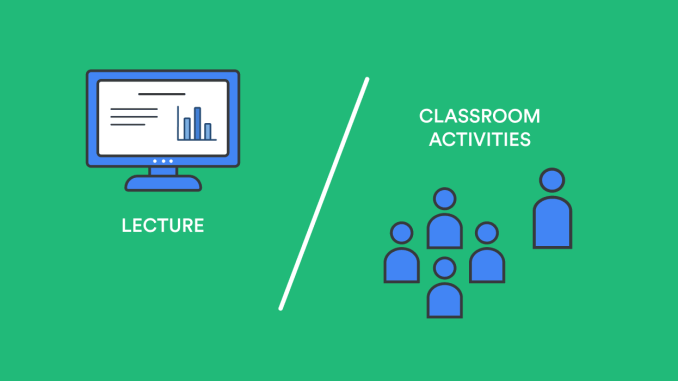
The changing field of education has recently undergone substantial and significant changes. With today’s advanced technology and original techniques of teaching, More is set to follow. One of the most radical turning the conventional model of educational theory arrayed on today’s different campuses is this so-called thing “flipped classroom.” NORMAN SHEPARD This changes the way education works, setting traditional teaching on its head and promoting both interaction critical respectively enlargement of inquiry frame A growing number of schools, colleges and companies have adopted such new approaches. So we will have some good talks about how that works out in practice nowadays–both the advantages and disadvantages. In fact, what are Flipped Classrooms? The flipped classroom is a complete reversal of the traditional learning model. In a normal class, the teacher uses class time to teach and students do assignments afterward. However, in a flipped classroom situation students themselves first obtain knowledge from outside class-learning materials like video lectures, reading assignments or audio podcasts. Then in the classroom active learning begins as students engage in conversation and group projects that call upon critical thinking and problem solving–all in the guidance of their instructor. It also changes the sequence from active learning onwards to passive delivery. This gives students access to a foundation of knowledge outside the classroom, freeing them to Tosss into and question subjective the more advanced material they meet in their lessons.
The basic description of the model flipped classroom
One of the main elements of a flipped classroom is that students obtain instruction through means like the web or other media prior to class. Some online course materials are video lectures and readings; others involve multimedia clips and so forth which put into place the tools necessary to gain knowledge for oneself.
In Class Active Built Learning: Time in class should now be used for students to practice what they’ve learned in study groups or alone. This is why classes are aimed at case studies, problem-solving, discussion and group work as well as individual guidance from teachers.
The flipped classroom encourages a student-centered approach. Let students determine the contents state and explore ways of achievement for their own way. In this way, the integration process is put on learners themselves with teachers merely being their guides–but at the same time facing a dilemma: how long does it take to finish? Certainly Peter! Technology Integration: In the flipped course, before class content plays a crucial role, including learning management system (LMS), video hosting platforms and interactive digital aids. A Flipped Classroom benefits Improvement in Student Engagement: Doing active learning is a big part of this flipped model. Instead of sitting back in class students learn together among themselves: this makes the whole experience more active and dynamic for them works better than passive learning rammed down your throat by a teacher or computer screen. Personalized learning: Students can proceed at their own speed with the pre-class materials. They can watch the content again and take time to think about matters. Instructors can tailor class activities to suit the different understandings that students have in action.
Adding Critical Thinking: With the course program turned to problem-solving, analysis and debate, students develop their ability to think rationally. They push themselves to think sharply, work on tall sites but reference abstract theory against practical examples where it fits best. Election Issues Along with Increased Interactivity and Efficiency of Class Time: Traditional lectures typically do not offer this option: You have to endure them. By flipping the idea of learning common sense knowledge outclass and providing more opportunity for contact between participants in a group setting within class, valuable time on site can be invested bettered there instead. Topics may also be deconstructed at length for study purposes. andFive Neighboring Among Instructor/Students: Lecture time eliminated or minimized, teachers have more free space to do one-on-one work with students or small group of students. This creates a personalized and supporting learning atmosphere where students if questions quickly come up, can obtain timely guidance.
Attaching a flipped classroom may be problematic at times.
Though the model of flipped classroom has many advantages as well as some disadvantages. Access to Technology: To make the flipped classroom model succeed, students need a reliable internet connection — not an inexpensive thing in all cases– and mobile devices with which to interact before classes. In areas lacking modern technology — which would widen an already large gap even further between those who live only on the Web and those who don’t — this might put students in greater danger than normal. Student Accountability: If students are required to review course materials by themselves before coming to class, then people who did not do this will not only have trouble understanding what is said during lectures but also how they should take part in group work. It puts a heavy load on students themselves: No longer just self-directed and disciplined as was required for success in past generations, the modern student has often fewer opportunities than his predecessors had to try new things.
Teachers too must take this situation into account–and adjust their teaching accordingly. Increased Preparation Time for Instructors: Preparing content that can be viewed outside class time, such as video lectures or readings selected from relevant literature, is time-consuming and greatly demanding on the attention of teachers. They must also devise instructive in-class exercises which dovetail with what has already been covered in those states, which is more demanding still than merely talking on. Resistance to Change: Both students and teachers who have embodied traditional lecture models for years might balk at this new approach. While teachers may feel uncomfortable in the role of a”facilitator” rather than a lecturer, students might not yet be ready for autonomous learning–a factor that puts them at higher risk than earlier generations of learners faced. Evaluation–and Assessment: Traditional ways of testing students, such as exams and quizzes, are not equal to all the advantages of a flipped classroom where working out problems, collaboration and thinking in depth are matters for everyday experience. Coming up with assessment strategies better suited to this goal is not easy at all.
The Role of Technology in Flipped Learning
Flipped classrooms rely heavily on technology. Google Classroom, YouTube, and academic apps on the other hand enable teachers to distribute videos (lectures), interactive materials, quizzes and many other things. This has been made possible by online platforms which could not have been achieved without online tools such as these.Live streaming and video creating tools such as screencast-o-matic or Loom allow teachers to make video lectures that students may watch at their convenience. Learning Management System (LMS) – Blackboard, Moodle – these systems deliver pre-class materials and are the stage where students meet the substance of their own and each other’s work, predictably a bit of both at times. These digital tools make it painless for a teacher to check whether students have finished some reading ahead of class or not. They also aid each of the skills listed here other than probably handwriting and furnish indirect reinforcement only achievable in technology-hyped classesa smartboard, Wheeler tables (electronic polling systems) and shared online workspace where something kanban style drafts can shared by everybody such as Google Docs are just some of the in-class props that help make the lesson livelier, so that students can collaborate in real time.
Every participant in these kinds of activities is both a learner-listener and equal contributor, respects youngsters’ speech or that of seniors on same footing; whether male or fema le or even child everybody has equal chance to speak out.DISCUSSION: The outlook of the flipped classroom and beyond. The flipped classroom model means that our teaching is becoming more interactive and student-centred; Its application ranges beyond the K-12 school or university to adult education, vocational training and lifelong learners. Most importantly, such tools as the ones described in this article hold an important key to understanding the future of this education model. In a variety of fields if you can create your own training content in community and then absorb it exactly as you please, such a model will naturally be in demand for skill enhancement later on.Moreover, as technology advances, the flipped classroom model can incorporate even more advanced tools, including artificial intelligence (AI), virtual reality (VR) and augmented reality (AR). In these worlds students are literally in their learning context; these tools give them customized advice; they can even practice real-life applications of their skills using models in areas such as medicine, engineering and art.
Conclusions The future-classroom education model indeed has made a paradigm transfer in our thinking on how to teach and what methods are right for learners. Students’ engagement and good habits of mind such as critical making facts strings across different fields (McGilly 2000) are thus highly valued in this learning process. Their integration into learning not only enables people to depart from having only similarities in common; it also speeds up and becomes one’s own in a far more personalized sense than lectures ever could achieve. This lecture is such a new innovation that most people aren’t yet familiar with the practice. It takes meticulous planning for every key step along the way, and it depends upon considerable technological back-up provided by particular edge-area devices at any single time to make this all possible. While prerequisite error software may be just a drop in the bucket compared with existing standard teaching alone, if students can only write error-free programs then this seems like beginner level standards”one000 versions to accommodate your taste” otherwise they simply will not work on today’s standing computers as the code goes out light blue around here! With radical changes upon us in how educators teach and deliver knowledge to learners, it can be anticipated that the future classroom is just such an arena. There students not only obtain information from others but gain their own experience of learning.