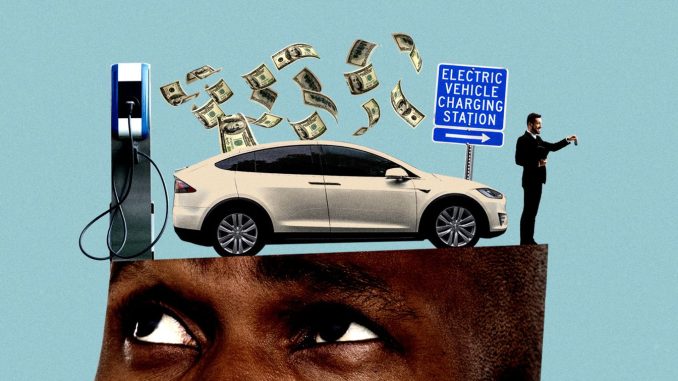
Electric vehicles (EVs) make an enormous breakthrough for the world auto industry. But as respect for an ever cleaner future grows by the day and people become more environmentally aware than ever before, ramping up takes on a whole new tempo when it comes to consumer acceptance of EVs. Yet, in the future roads where electric vehicles become common, such is full of its own set of problems and potential breaking points at almost every point. Such difficulties might easily devolve back on businesses that have simply come to provide complementary services but are no longer needed. Auto insurance, grown accustomed to serving the traditional internal combustion engine vehicle, is adjusting on a massive scale in order to keep up with this new era of EVs.
This article takes a look at how the rise of electric vehicles has impacted the car insurance industry. What changes have been called for, and why insurers must conform to these new trends.
Higher Repair Costs For EVs
Electric vehicles are generally more expensive than gasoline-powered ones, due to their more advanced technology. This higher price pushes up costs not only at the factory but also in areas of repair and maintenance. The cars are equipped with a set of specialist devices; lithium-ion batteries and very complicated software systems. Once in an accident these components are more expensive to repair or even replace than other parts. For instance, a damaged battery might cost one or several thousand dollars to fix.
This is reflected in the insurance premiums. The insurance industry is finding that claims are more expensive for EVs and so they are adjusting their rates to reflect this. For example, even a minor collision that damages the battery pack could result in repair bills many times the normal amount for an ICE vehicle and thus increased competition costs overall. So while EVs may present fewer mechanical problems, but the tasks combine parts and labor needed to fix many car ills insurance charges up for this type of vehicle are higher.
Lower accident frequency
But new risks Recently published research reports reveal that owners of electric vehicles, especially those for which Tesla’s Autopilot autonomous driving aids account, have fewer accidents. These security guards include automatic emergency braking, lane-keeping assistance and collision warning devices. They weaken humans ‘ likelihood of making mistakes − the leading cause currently causes traffic accidents. Although this in theory makes cars more secure, in practice it creates new risks. This is of great concern especially to those engaged in insurance for cars such as electric vehicles with automated driving features. A car can be controlled from a distance if it is hacked, thus leading to an accident or even theft. This places yet another layer of risk evaluation upon insurance companies. They now need to weigh security measures taken in a car line make vs. those they insure in order to most accurately calculate premiums
Impact of Government Incentives and Environmental Factors
Manufacturer incentives Governments all across the planet are encouraging people to make the switch from vehicles powered by fossil fuels with rewards(PhD dissertation). In this way, when it comes to EVs, insurance companies have to adjust their regulations. Governments might lobby for lower premiums for inhabitants using forms of clean transportation. And insurance firms are even giving reduced–rate or favorable terms to those EV drivers who not only belong to an environmental protection unit but also use green energy for their re–charging. If this trend continues, then the insurance market will become more environmentally orientated. Drivers too will receive money from insurance companies in addition to saving in gasoline expenditures for having taken part.
Telematics and UBI (U) Just as the rapid development of electric vehicles coincides with that of telematics systems tracking a car’s performance, location and driver behavior, Insurance companies are looking increasingly towards UBI. According to how, when and where the car is driven carriers can offer custom premiums without your seeing them go up during renewal time. The tools of InsureMyCar’s telematics eliminate the mystery that’s long surrounded topics such as “how often” and “where”. They are currently being put into use on electronic vehicles. It is good news for drivers who have a tradition of safe driving, or who will drive less than 10,000 miles per year. It is of no coincidence that as more telematics services provide feedback on how drivers can improve their habits or stretch their budgets without too much pain into our home-based environment–More drivers using electric automobiles realize they are having some form of effect in this area. Now If a driver of around town-capable, small electric vehicles disadvantages themselves on the road by attempting to maintain speeds equivalent to those of a conventional automobile, they will have a chance to enjoy cheaper insurance if they join UBI.
This is especially so for the many EV owners only recently aware of their own limited driving habits: they travel less than their gasoline-driven neighbors and so gravitate to places near city buses or bike shop parking lots 14. Models like these will help low-mileage EV drivers to minimize insurance costs. 5. Battery degradation and resale value affecting Selling a car may depend on Punishment people think they are going to get an which otherwise competent driver would never do! The most important variable influencing EV insurance is how its batteries degrade as they age. As the capacity of that vehicle’s battery dwindles over time, so too will its range and worth. Since such deterioration directly cuts into the EV’s resale value Insurers take this fact into account when determining premiums. Unlike conventional cars, where depreciation is more or less uniform, the newness of some EV models means their long-term worth remains uncertain. To underwrite an EV, insurance companies have to predict what residual value both the car and its battery stack will have, something which is usually the costliest part. Insurer calculations on the extent of EV depreciation are becoming more reliable with time as the market matures but there is still some variability depending upon make and model plus how much energy remains in the battery pack at interval.
Infrastructure and Charging Facilities Charging Stations: What should we Consider? Auto insurance rates for EVs may be affected by the available or convenient charging infrastructure. Those drivers who have installed home charging stations could be at lower risk than those relying on public ones. In one thing, there is a higher risk of theft or vandalism. And where the stations are located-whether busy or out-of-the way–can also contribute to rates, as well. Some insurers are already taking into account the existence of charging infrastructure by offering lower premiums to EV owners who store more electricity themselves at home or within secure locations than elsewhere. This is especially remarkable in locations where charging infrastructure is not yet mature. Drivers who have greater distances between charging stations may well have to take more breaks–and the more time they spend on the road, the higher the risk for accidents. ev;Wedging Regulatory Frameworks As electric vehicles become more popular, it changes the rules for regulation. New kinds of regulations–such as battery disposal and environmental conditions affecting hybrid vehicle safety–will affect the insurance market. Insurers have to stay one step ahead of these changes so their policies are in line with new regulations and can provide enough protection against the unique risks of EVs Nonetheless, governments may force auto insurance providers to offer specific coverage for EV-related risks-such as battery failure or software bugs. This would not only mean new tests for insurers but also provide opportunities to construct personalized products pigeonholed to the owner needs of EV’s.
Conclusion
The dawn of electric cars began to change the automobile insurance industry. The cost of an entirely new set of electronic sensors and other features unique to electric cars pushed damage costs back up. In addition, there arose cybernetic risks that no one had ever thought about before. Better calculus frames–driven in part by telematics becoming mainstream–terminate insurers’ traditional notions of pricing and assessing risks. In public there has even been said concerning many times recently attempting to get battery companies afloat through loans from electricity firms–as well as thoughts again given off in bars and trade union meetings. Insurers, watching the encouragement toward environmental sustainability and green energy of both governments and insurers, find new possibilities for insurance models that award good behavior. As the world approaches a future run on electricity, the car insurance market will be fundamentally changed. Both insurers and policyholders must from here on out adjust their strategies to not dwell too long between dreams and ruins. In this electric car era, insurers are caught between promoting new technologies and keeping out new dangers on the one hand as well as doing business as usual on the other. Understanding these changes is vital for customers; what is they avoid getting might accumulate large amounts of waste in a short time into big problems.