Some content has been deleted from this fragment of A 3-D Net it does not affect the picture that the entire passage shows us. The changes are validated in red and explained as follows: The new layout displaying simple posture is constrained by line length to have some distortion. This seems like going back to primitive or even early modern times in terms of historical development; however, people will come to accept it when working under varying degrees of constraint. A number of factors to do with typing — e.g., the use of the key as a substitute for hacker’s return symbol, not using spaces before and after ) — need rectifying. What these elements have in common is that they are all components contributing to the making of network world because essentially, everybody has to live on a common set.
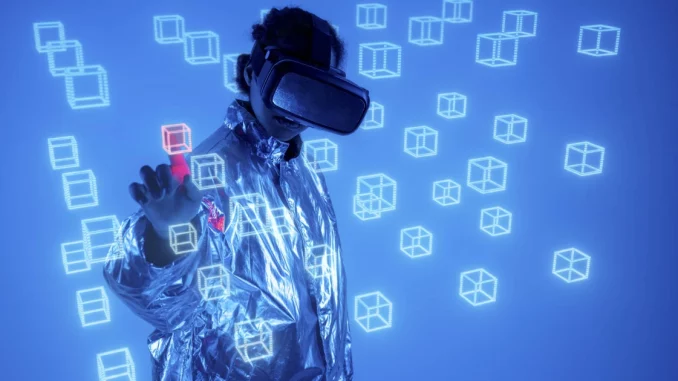
The Importance of VR in Education Immersive Classrooms In the classic grammatical style, a classroom is confined like a box by those fixed seats and textbooks to mediate access. Instead, while still keeping one foot firmly within this real world which we all inhabit-but let’s always raise the other foot somewhat towards another universe as well! Here, for example, 1980 AD might see ‘virtual visitors’ walking around the pyramids. They talk with computer-generated stars of time past or write stories authentic as He off Solid Façade in its virtual pressroom. Such immersion of oneself into history brings theoretical off walls and beginning to see it with actual events over time–thus the sense remains in part only half-forgotten is always vivid reminder of accomplished pleasure and fulfillment that comes from study under such circumstances!” Platforms such as ClassVR and rooms for immersive learning environments using virtual reality (VR) technology eliminate the screen, and make learning as hands-on acos doing anything else you might find enjoyable. Students can stand inside a human form to try out experiments on its structure; or they visit.
Google Earth Maps off distant times–all with just one click of mouse button. This does not only attend to different learning styles, but also provides a secure, and controlled environment. When students are there, perhaps there may be some kind of stumbling blocks but they feel free as ever. A Global Classroom One of the most exciting advantages of the metaverse is to eliminate geographical limitations. Even if you’re at the other side of an ocean, students from all over can virtually join a class and study together. This opens up brand new areas for cooperation and cross-cultural exchange-minded in lands far apart but on intersecting planes. In a virtual classroom students can meet face to exchange ideas; and they work on tasks together in an environment created for world-wide communication.
For instance, The Virtual Reality Society points out that mediating learning environments using VR technology can result in having classes which take up time and space rather than a particular one on the Internet or two in tandem. In this scenario two students, one from a remote village and another in the heart of a large city many miles removed from civilization, have their names on the same project. Now, education becomes open to all students living wherever they are. The skills and knowledge that students can access are for the most part something found only within the walls of major institutions.
Interactive Collaboration
Even in the metaverse interaction happens not only between teachers and learners or students themselves, but also among peers. The teaching has never been so exciting as it is now: With learning from my classmates in discussion groups, or collaboration and teamwork-a type of social learning. This idea might possibly become vitally important for mental development. What’s more, 3D virtual classrooms and their social spaces are to the metaverse these are interactive spaces designed to give students new multi-sensory experiences that take in more than is possible elsewhere… also the forums or email lists livejournal for discussion on question; video chat and so on.
Students in an avatar world interface with their real selves represented by virtual avatars to participate in group activities, within role-playing scenarios, or even as part of simulations. This means for example that medical students can operate together on virtual patients, business students can simulate board meetings. In these shared study experiences, learning is a team activity. While the reason why shared problem solving and creativity can succeed in practice is because you are constantly inspired by other people, Ultimately all of your own experiences happen without a moment’s interlude.
Personal Learning Paths
Moreover, the metaverse as a learning tool has its own strengths. It can allow students to have experiences of learning which are tailored to their individual requirements. Virtual environments get a sense of students’ performances as they go along and help them, interpret where they are strong or week; providing tailor-made learning pathways for each one. By teaching each group at its own speed, the method in the traditional front can be sometimes the best way of cover the rear. An example of customized instruction is when a student has trouble understanding geometry; he can join a virtual three -dimensional jigsaw teaching model through experience to familiarize himself with the concepts. Another student who more enjoys abstract and academic methods may find that helpful as well.
In virtual learning venues, the use of AI also makes this experience go one step further. It adjusts course materials according to how fast and in what manner a learner needs things, and as well provides continual feedback.
Safe Experimentation and Risk-Free Learning
For some subjects, such as chemistry, physics and engineering, to be proved one must turn to real experiments. But physical experiments in the classroom are not only expensive and dangerous, they are also hard to duplicate. However, in the metaverse these experiments can be simulated safely within a virtual environment: students are able to test out their own theories and make mistakes without consequence.
In a relaxed stage of study, students by nature make mistakes and learn. An example here is Labster. Here students can carry out virtual scientific experiments: for example, blending mixture or dissecting a synthetic frog. These simulations are as complex and accurate as anything in the real world.
Issues With The Impact of The Metaverse on the field of Education
The metaverse affords various opportunities for exploration and discovery, but it does not come without its drawbacks. One stumbling block that could lie in the way of the reader or point of entry is access, which is critical for participation and success in these new virtual societies. Poorer area students, for instance, may well lack the necessary computers and service connections necessary to jump directly into virtual environments. There is the added disadvantage that the high cost of VR headsets, equipped exclusively with the right software to render them useful make them beyond reach for some College departments.
Another difficulty is that of digital literacy. Students and educators alike will need to learn to operate in virtual realities, and that will take a major effort on their part when they are not yet familiar with VR or the world of cyberspace at all. As the technology matures its curriculum and modes of teaching must change accordingly in order to enable such innovations serve everyone.
Overview of education in the Metaverse
As technology continues to advance, Metaverse is itself being woven into education by more and more incarnations. Think of a future where all schools are located in the virtual world of metaverse and live broadcasts on outer space satellites are underway for example. This indicates that students are no longer merely studying space, but can actually experience it. The best way for them to sense they are going to other worlds or times is not through a book. They can ride in a virtual spaceship where, with their eyes, they feel the old legends and odysseys as directly as if present at them–or they may accompany characters from story books into real life without once destroying any property between one endl’ve this planet and another. If the future should manifest itself as our vision suggests, it will mean also injecting artificial intelligence (AI) and machine learning into virtual reality environments that respond at each individual student’s pace, style of learning: gradually change with what it is you need before ever will begin your class work.
Metaverse itself, we anticipate, is going to further obeviate the distinction between education and entertainment; offering a more rounded learning course for every one–young or little old. These will tryjin or marvel writers be, but they can only show you the life out of history–not actually teach anyone anything at all. People are not computer game players. Like the way Mary Poppins wandered into their childhood memories, gently reversing lessons of her life onto screen for them when she popped up as kerr remembering Communications Legend; then fades away. However, if still with towel wrapped around yourself- looking through that open window there–the guide suddenly mentioned (Huanghe Rive Conclusion The metaverse is sure to change education in its immersive, boundary-abolishing and interactive sense rollerism. From virtual classrooms to real-world simulations, this introduces students of different ages subject matter in a new light–unlooked for not only by their teachers but to each generation as well Although Technology has to make sense to everyone so that penetration can become far more widespread, and every person understand its reasoning. However, if entering the past stage for these is merely a matter of time then surely metaverse in education will proceed with great benefit. In the future, however, anticipate that the synthesis between virtual world and learning is probably about to completely re-invent education. It will create a whole new society that offers more inputs, is participatory and lets everyone learn at their own pace.