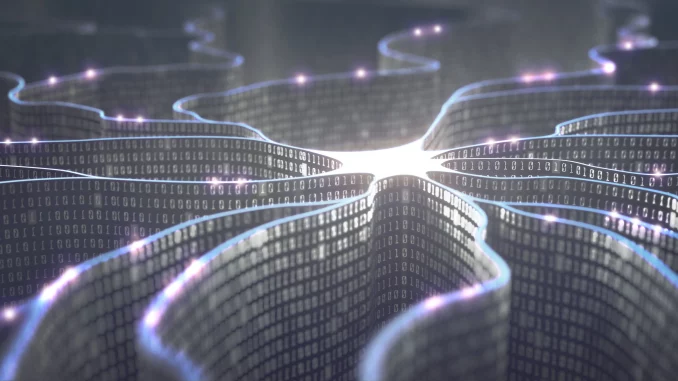
Not the traditional use case of AI, but the one that is exploding right now, these neural networks are perhaps this century’s best and most powerful tool. In a way that was once thought impossible, they allow machines to learn from data. These networks are responsible for many of the breakthroughs seen in the field of machine learning today; for when their structure is modeled on all that we know about human brains, it’s only fitting that the results should be so delightful. From natural language processing (NLP) and computer vision to self-driving cars and personalized recommendations, notably Their varieties of application stand well visible on all sides. The crucial issue now that we are on the frontier of a new era in AI is: what does it mean for future machine learning? More broadly, How are neural networks changing based on this standpoint—and what does it imply about society or industry as a whole?
Image video bridge
March 17 Neural networks have gained this name because they are computational models designed to read patterns. A network is a lot like an assembly of interconnected nodes, each of which is known as a “neuron” or node and processes input data only to pass that on down the line for later nodes. The human brain’s structure was the inspiration for these networks, and thus can be considered a historical world breakthrough in learning machines. Neural networks are regarded as the driver in today’s world of natural language processing (NLP), computer vision, personable recommendations and self-driving cars. Its purposes are broad-ranging and diverse.
Knowledge is acquired by these networks when the connection weights are tuned and adjusted according to mistakes made in their predictions. This technique is referred to as backpropagation.
Development of Deep learning
Neural networks have been around for decades, for example, but deep learning methods — with many hidden layers of calculation and access to large volumes of data owing neural network plus the proliferation in recent years faster computers, have given it something even more unimaginable than success. Deep learning made it possible for neural networks to run increasingly complex tasks thanks to terabytes of data and a huge amount of computing power– There is no such thing as without graphics processing units and though Samsung’s most recent chip offers about half the same processing speed in deep learning as Nvidia’s Tesla V100, development has also of course been give n a boost from home to wherever there is cloud computing.
Deep learning methods such as Convolutional Neural Networks (CNNs) and Recurrent Neural Networks (RNNs) have made a big impression in object recognition, voice comprehension, and even generating natural-sounding text or images. CNNs, for example, automatically learn hierarchical spatial features from the data themselves. They are good at finding spatial heirachies within images. RNNs are learning about capturing temporal dependences between data points out of sequences.
One of the most famous triumphs of deep learning is in the realm of Natural Language Processing (NLP). With GPT-3 from OpenAI and BERT by Google, neural networks have changed the way machines understand and generate language. Chatbots, virtual assistants, real-time translation and content production are only a peek at where leopards may hide themselves in future.
Industry Transformation
The influence of neural network models is sweeping through all manner of professions. For instance, in medical treatment deep learning has made it possible for doctors to make more precise diagnoses. Now they can predict patient outcomes from images of medical scans and information about electronic healthcare records. These neural networks are also finding use in today’s analysis of pictures from radio logical scanning to pick out signs of disease such as cancer– and often with accuracy equal to or better than doctors ‘ own.
Neural networks have found a place in finance. Detecting fraudulent transactions, optimizing stock trading strategies and offering personalized financial advice for clients… now they can even do all these for themselves. A neural network can handle huge amounts of market data, but it also has this dynamic feature that enables it to adapt its operators tactics to suit changing circumstances. This has created tools for effective risk management which are much more sophisticated than anything available previously, and practices of investment that are actually intelligent rather than just lucky.
Autonomous vehicles have totally changed the way we look at cars. Because of neural network algorithms, sensors such as cameras, radar and LiDAR feed data into neural networks now. This information is analysed by neural networks to help the vehicle with its environment, decision-making and to run safely without human hand on a tiller. All this, can revolutionize transportation: fewer accidents for better road traffic; everyone can take advantage of public transport.
Neural networks have also been of benefit elsewhere for instance in areas as diverse as retailing, entertainment and agriculture. Netflix is able to offer personal recommendations in your home, with Amazon (and other e-commerce businesses) supply chain logistics have undergone extreme simplification; even the particular directions to take for farming have neural network-driven insights to monitor plant diseases.
Solving Problems and Solving Ethical Considerations
The vast abilities of neural networks their less tactic side mark another challenge for management.It is, at present, perhaps the key. That is the “black box” standing between us and understanding what deep learning models actually do. Neral networks are particularly difficult for instance to interpret.However, crucial applications exist in such places under these circumstances as medical treatment and legal judgment–it could be the difference between life or death for someone future just how understandable why a decision was made.
Another thing to note is that with large amounts of data sets needed for neural network training, problems such as security, privacy and bias could manifest themselves greatly. If it is presented with an incomplete or distorted picture, that discrimination will still remain intact through the neural network. This leads to unfair results. The way forward to these problems involves getting more good governance data, models that are easier to understand, and an ethical framework for AI which stresses fairness, openness and responsibility.
In addition, the trend–initially led by OpenAI but now being duplicated on Linux and other user-friendly platforms–of democratizing AI with pre-trained models that implement functions like painting by number so as to make neural networks,pre-trained models has proved a huge spur to popularization. This will extend to expansion in the take-up of neural networks. In addition, user-friendly software incorporating well-defined functions for specific purposes means companies or individuals with no IT knowledge can profit from the benefits AI offers without needing much, if any, firsthand work: They just manipulate the software. For people with more IT knowledge but not the specific and deep expertise necessary for programming, that may be a PC, Mac or Unix box. They might just install the tool-if someone else has already done webpage design and I use their library, why bother learning about loops or macros? The year 1995 may be remembered as major turning point for this reasoning. Thus a neural bank which needs about 30 minutes to setup does serviceable help to those seeking language recognition or similar problems. Unless there is an international coup or war, people in many countries now can set it up on their own computer networks and after a few minutes of setup successfully use the system for sentence translation This is typical of today’s computers, which can provide a huge playing field to the significant portion of the population that is browsing the Web in addition to those who might be said to be served by just a few applications systems. In instances such as online chess variant games, there might occasionally at a time arise 10 to 100 million listeners. But the field is developing rapidly. What happens, though, if this kind of thing gets into the hands of news media?
Conclusion
The development of new models for automation, analysis and decision-making by neural networks must inevitably transform the way in which machine learning is done in future. Under own guidance, the technology has generated by-products which are currently being exported to the rest of the world–for anyone! From healthcare and finance to autonomous vehicles, neural network designs are making new discoveries that will permeate across many industrial sectors as well as everyday life. Nevertheless, as we accelerate into the future it is absolutely essential to grapple with major ethical and technical problems raised by these technologies: so that the next generation of neural networks can be both a power for good in an open, just manner. Through open source research and conscientious implementation, neural networks will undoubtedly be at the crest of the planned wave of AI revolution-giving rise to brighter, better systems able to confront some of our planet’s most pressing issues.