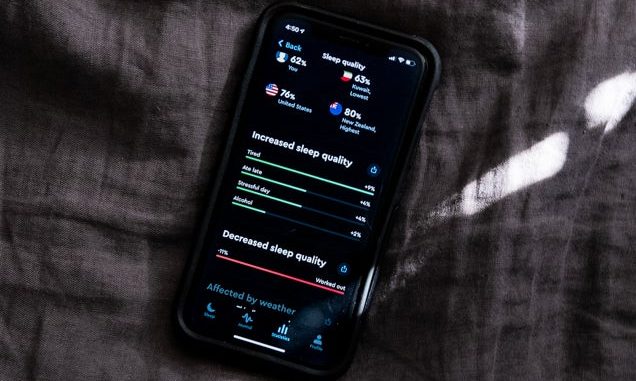
At 4:30 a.m., sleep may be seen as a luxury in an increasingly sleep-deprived world — but value wise has it?
However, its value lies not so much in material worth but as something that can be used to cope with the myriad problems of modem life. Today ’ s new phrase for “having it all” is “major rest!”#
The same gadgets and wearables that promote a healthy lifestyle do not stop at fitness and exercise. Today they ‘re everywhere, with sleep-tracking apps using sensors built within your phone or wearable device as well as other types of gadget.
These apps also give users the cryptographic keys of sleep that they can use to lock or unlock benefits themselves. A careful analysis on his daily rest ratios showed Wang Dingshan, a 35 year-old Shenzhen native who often works until one in the morning, abided by most biological laws for resting well.
To conclude, with a mixture of accelerometer sensors, heart rate monitors and sound analysis these apps give detailed information about the user’s level of sleep cycle Keru Halson, Korea Today.
The same sensors that prompt user preference shortcuts in technical innovation–like those which disable headphone jacks when removed from ears, for example -can now be turned into components so small and the material used endowed with so many possibilities that they seem only limited by our imaginations. At least this is what many folks hope will happen.6.
Personalized Advice Most of the popular sleep tracking apps on the market these days are like the apps without soul of the 80s What’s more, sleep tracking apps can give you counsel that is right for ytou. Take Torla (an app designed to help with irregular cycles 6 ), for example. If it finds your sleep behavior is irregular, it says you should fix a regular bedtime or cut back on drinking too much coffee–in short making better use of time in each cycle.
Whoop and Oura go a step further, bringing fascinating data at your fingertips: stress levels in real time, how physical activity affects your sleeping quality and more. With this kind of personalized feedback, users can make informed adjustments to their daily routines for better rest.
Encouraging Healthy Sleep Habits
Sleep tracking software has proven itself effective in encouraging self-discipline in users. If a person looks back over their record for evidence of sleeping “sins”, such as going to bed late and waking up early, that can make them feel guilty. As a consequence, they will come more into line with proper habits sooner or later. They will also be keen for sure not to allow the wind to enter their room or block out all light by closing windows-this is something that ultimately improves sleep quality.
The Role of Smart Alarms
Similarly, smartphones in general also sport intelligent wake alarms. They sense the juncture between lighter stages of sleep and wake you at that moment. Without the sudden jolt caused by an ordinary alarm, smart alarms allow the sleeper to feel wonderful. The day starts well and very often a person feels happier as well. Mapped onto the individual’s own biorhythms, these alarms offer unloading of morning work. They demonstrate the intricate subdivision of feelings and energies at morning, midday in sixth grade math terms. You have become more aware through them.
The Future of Sleep Tracking Technology
As technology advances, so does the sophistication of sleep tracking software. Better analysis techniques now make use of artificial intelligence and machine learning, resulting in improved advice on how people should sleep. Nowadays, wearable devices such as smart watches and rings afford round-the-clock monitoring not only for night but also day. Interventions based on real-time records of sleep patterns may be possible in future developments: your bedroom heating adjusted as soon as changes are noted, or lights dimmed.
Challenges And Reflections
Sleep tracking kits aren’t flawless despite the outstanding service they offer. The accuracy of such data is a different story. If everything is placed solely on Smartphone systems then one cannot help wondering how reliable the signals may be–certain areas have yet to register any significant progress at all in terms of innovation. Besides this, monitoring itself may lead to another major uphill fight: in specific lingistically opaque patients it turns out that people can suffer “orthosomnia” as a result of any sort of emphasis put on perfect sleep whatsoever.
To conquer these problems, the experts reckon that sleep apps should be used only as an adjunct to everyone’s diagnosis, not its final word. Besides, those with chronic sleep problems must seek help from their doctors.
Conclusion
Sleep tracking apps have given everyone more insight into their sleep than ever before. They allow people to share insights and obtain feedback from a global audience about future shuteye improvements. This is one of their attractions. With an accent on developing healthy habits, using the foremost technology and personalized analysis services for insomniacs, is making these invaluable tools extend the meaning of sleep indeed. Despite all the difficulties we face ahead, there is also some hope that one day people could still discover how to make themselves healthier night’avoiders through data-driven solutions.