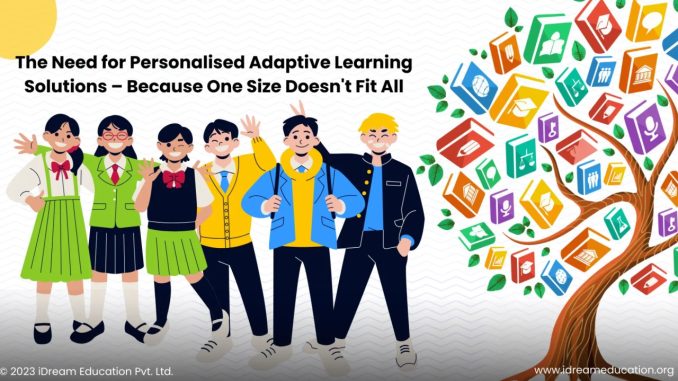
In an era defined by customization and choice, the notion that education should follow a standardized path feels increasingly outdated. Personalized learning is gaining traction not just as a pedagogical trend, but as a strategic imperative for educators, institutions, and organizations that understand the diversity of learners. The idea is simple but powerful: one size doesn’t fit all. Learners come with different backgrounds, strengths, goals, and challenges. When education is tailored to meet those individual needs, it becomes more engaging, more effective, and more sustainable.
Traditional models of instruction often assume a uniform pace and style of learning. Everyone receives the same content, delivered in the same way, and is expected to demonstrate mastery on the same timeline. While this approach may be efficient from an administrative standpoint, it overlooks the complexity of human cognition and motivation. A student who excels in visual learning may struggle with text-heavy materials, while another who thrives in collaborative environments may disengage in solitary tasks. Personalized learning recognizes these differences and adapts accordingly, offering multiple pathways to understanding and success.
Technology has played a pivotal role in making personalized learning more accessible and scalable. Digital platforms can track progress, identify gaps, and recommend resources tailored to individual learners. But the real value lies not in the algorithms, but in how they’re used. A learning management system that adjusts content based on performance is only effective if it’s paired with thoughtful instruction and meaningful feedback. The human element remains essential. Teachers, mentors, and facilitators must interpret data, understand context, and make informed decisions about how to support each learner. Personalization is not automation—it’s intentionality.
In business education and corporate training, personalized learning is becoming a cornerstone of talent development. Organizations recognize that employees bring varied experiences and aspirations to the table. A one-size-fits-all training module may check compliance boxes, but it rarely drives engagement or transformation. Instead, companies are investing in adaptive learning platforms, modular content, and coaching programs that allow individuals to focus on what matters most to them. A marketing professional might choose to deepen their skills in analytics, while a team leader might prioritize emotional intelligence. These choices reflect not just personal interest, but strategic alignment with career goals and organizational needs.
Personalized learning also supports equity. When instruction is tailored, it can help close gaps and level the playing field. Students who need more time or different formats are no longer penalized—they’re supported. This approach acknowledges that learning differences are not deficits, but variations in how people process and apply information. In inclusive classrooms, personalization allows for differentiated instruction, culturally responsive content, and accommodations that empower all learners. It’s a shift from standardization to humanization, and it has profound implications for access and achievement.
The challenge, of course, lies in implementation. Personalized learning requires resources, training, and a shift in mindset. Educators must be equipped to design flexible curricula, use data effectively, and foster environments where students feel empowered to take ownership of their learning. Institutions must invest in infrastructure and professional development. And learners themselves must be guided to reflect on their goals, monitor their progress, and advocate for their needs. This is not a passive process—it’s a partnership. When done well, it cultivates autonomy, resilience, and a lifelong love of learning.
Assessment in personalized learning also looks different. Instead of relying solely on standardized tests, educators use formative assessments, portfolios, and performance tasks to gauge understanding. These methods provide richer insights into how students think, solve problems, and apply knowledge. They also allow for more timely and targeted feedback. A student who receives specific guidance on a project is more likely to improve than one who gets a generic score weeks later. Assessment becomes a tool for learning, not just a measure of it.
Ultimately, personalized learning is about honoring the individual while maintaining high standards. It’s not about lowering expectations—it’s about meeting learners where they are and helping them reach their full potential. In a world that values agility, creativity, and collaboration, the ability to learn in personalized ways is a competitive advantage. It prepares students and professionals to adapt, to innovate, and to lead. And it reminds us that education is not a product to be delivered, but a process to be experienced.
As the conversation around education continues to evolve, personalized learning stands out as a model that reflects the complexity and promise of human development. It challenges us to rethink assumptions, redesign systems, and reimagine what learning can look like. It’s not a trend—it’s a transformation. And it begins with a simple truth: one size doesn’t fit all. When we embrace that, we open the door to deeper engagement, greater equity, and more meaningful outcomes for every learner.