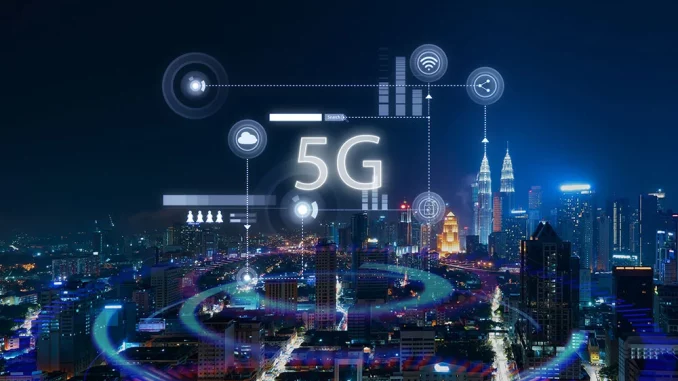
The global adoption of 5G technology is reshaping the way we connect, communicate, and experience the digital world. With ultra-fast speeds, lower latency, and enhanced connectivity, 5G is paving the way for new innovations in industries such as healthcare, smart cities, autonomous vehicles, and entertainment. This article explores how 5G is transforming connectivity, its advantages, challenges, and what the future holds.
What is 5G?
5G (Fifth Generation) is the latest advancement in wireless network technology, designed to offer higher speeds, reduced latency, and increased capacity compared to its predecessors (4G and LTE). It utilizes advanced radio frequencies, including mmWave (millimeter wave) and sub-6GHz bands, to deliver superior performance.
Benefits of 5G Technology
- Ultra-Fast Speeds – 5G networks can deliver speeds up to 100 times faster than 4G, enabling instant downloads and seamless streaming.
- Lower Latency – Reduced latency (as low as 1 millisecond) enhances real-time interactions, making technologies like virtual reality (VR) and autonomous vehicles more efficient.
- Increased Network Capacity – 5G can support millions of connected devices per square kilometer, making it ideal for IoT (Internet of Things) applications.
- Enhanced Mobile Experience – With higher bandwidth, users experience improved call quality, faster browsing, and seamless video conferencing.
- Energy Efficiency – 5G networks consume less power than traditional networks, making them more sustainable and cost-effective.
- Better Connectivity in Remote Areas – 5G has the potential to bring high-speed internet access to rural and underserved areas.
- Improved Cloud Gaming and AR/VR Experiences – With minimal lag and higher data transfer rates, 5G enhances cloud gaming and augmented reality (AR) applications.
Industries Transformed by 5G
1. Healthcare
5G enables remote surgeries, telemedicine, and real-time patient monitoring, allowing doctors to provide better healthcare services regardless of location. With 5G-enabled medical devices, healthcare professionals can access patient data faster and more accurately.
2. Autonomous Vehicles
Self-driving cars require ultra-low latency for real-time data processing. 5G ensures safer and more efficient vehicle communication systems. It enables vehicle-to-vehicle (V2V) and vehicle-to-infrastructure (V2I) communication, improving traffic management and reducing accidents.
3. Smart Cities
5G supports smart city initiatives by enhancing traffic management, energy efficiency, and real-time monitoring systems. Cities can use 5G for intelligent traffic lights, connected surveillance cameras, and smart grids that optimize energy usage.
4. Entertainment & Gaming
Cloud gaming and AR/VR experiences are significantly improved with 5G’s high-speed and low-latency capabilities. Streaming 4K and 8K videos without buffering becomes a reality, changing the way consumers engage with media.
5. Manufacturing & Industry 4.0
Factories are becoming more automated with the help of 5G-enabled robotics and smart machinery. Industrial IoT (IIoT) applications benefit from real-time data analysis, predictive maintenance, and seamless communication between machines.
6. Education & Remote Learning
5G enhances remote education by providing high-speed connectivity for virtual classrooms, interactive learning, and AI-powered educational tools. Students in remote areas gain access to high-quality education without interruptions.
Challenges of 5G Adoption
- Infrastructure Costs – Deploying 5G requires significant investment in new towers, fiber optic cables, and network upgrades.
- Security Concerns – With increased connectivity, cyber threats and data breaches pose greater risks.
- Device Compatibility – Not all current devices support 5G, requiring consumers to upgrade their smartphones and IoT devices.
- Limited Coverage in Rural Areas – While 5G is expanding, some remote areas still lack access to high-speed networks.
- Health Concerns & Public Perception – Some concerns exist about the potential health risks of 5G radiation, though no conclusive scientific evidence has been found.
- Regulatory and Spectrum Allocation Challenges – Governments must efficiently allocate spectrum for 5G deployment while addressing regulatory concerns.
The Future of 5G
As technology advances, widespread 5G adoption will unlock new opportunities, shaping the future of communication, business, and innovation. Here’s what to expect:
- 6G Development – While 5G is still rolling out, researchers are already working on 6G, promising even faster speeds and lower latency.
- AI-Integrated Networks – AI-driven network management will optimize 5G performance, reduce downtime, and enhance efficiency.
- Wider Adoption of IoT – 5G will accelerate IoT expansion, enabling smarter homes, connected healthcare devices, and intelligent city infrastructure.
- Expansion into Space-Based Connectivity – Companies like SpaceX and OneWeb are working on satellite-based 5G networks to bring global coverage.
- Improved Network Slicing – Businesses will be able to create customized network segments to optimize performance for specific applications.
- Quantum Cryptography for 5G Security – Enhanced security measures, such as quantum encryption, will protect sensitive data in the 5G era.
Conclusion
5G is revolutionizing connectivity, creating endless possibilities across multiple industries. As technology advances, widespread 5G adoption will unlock new opportunities, shaping the future of communication, business, and innovation. Despite existing challenges, 5G’s potential is limitless, and businesses that embrace it early will gain a competitive edge in the digital landscape.