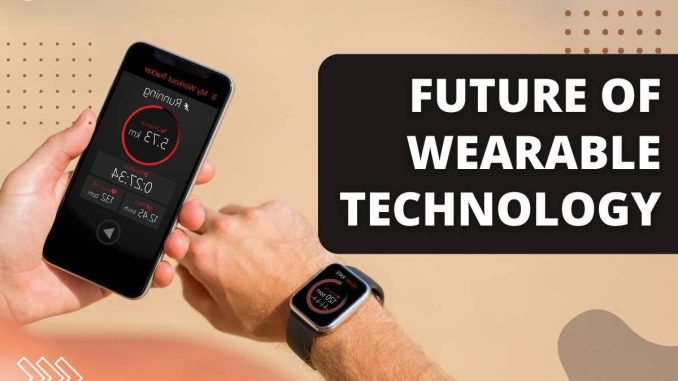
The human desire for convenience, connectivity, and self-optimization has long driven technological innovation. In this pursuit, smartwatches and the broader category of wearable technology have evolved from niche gadgets into increasingly sophisticated devices, seamlessly integrating with our daily lives. What began as simple fitness trackers and notification relays has blossomed into a diverse ecosystem of intelligent wearables, poised to fundamentally reshape how we interact with the digital world, manage our health, and experience our surroundings. The future of this field promises a convergence of advanced sensors, artificial intelligence, and seamless connectivity, leading to devices that are not just extensions of our smartphones, but proactive companions and indispensable tools.
One of the most significant trajectories for smartwatches and wearable technology is their deepening role as personal health and wellness hubs. While current devices already track heart rate, steps, and sleep patterns, the next generation will move beyond mere data collection to offering comprehensive, clinical-grade health monitoring. Imagine smartwatches equipped with continuous glucose monitoring for diabetes management, highly accurate blood pressure tracking, or even non-invasive sweat sensors that analyze hydration levels and electrolyte balance in real-time. The ability to monitor critical vital signs and biomarkers continuously and unobtrusively will enable earlier disease detection, more personalized preventative care, and proactive management of chronic conditions. This shift transforms wearables from lifestyle accessories into powerful diagnostic and therapeutic tools, facilitating a new era of remote patient monitoring and potentially reducing the burden on traditional healthcare systems. Companies are already investing heavily in integrating these devices with electronic health records (EHRs) and telehealth services, allowing users to securely share real-time health data with their healthcare providers, fostering a more collaborative and informed approach to personal well-being.
Beyond vital signs, wearables are also delving into more nuanced aspects of health, including mental well-being and emotional states. Advanced electrodermal activity (EDA) sensors, which measure subtle changes in skin conductivity, coupled with sophisticated AI algorithms, are enabling devices to interpret physiological signatures of stress, anxiety, and even mood fluctuations. This opens up possibilities for real-time stress management tools, personalized guided meditations, and gentle nudges to take breaks, offering a proactive approach to mental health support directly from the wrist or other discreet form factors like smart rings. These smart rings, designed for discreet, always-on monitoring, represent another exciting frontier, offering robust health tracking in a minimalist form factor that appeals to users seeking functionality without overt tech presence.
The user interface and interaction paradigm of wearables are also set for significant evolution. Current smartwatches primarily rely on small touchscreens, voice commands, and physical buttons. The future promises more intuitive and seamless interactions. Gesture controls, where users can navigate menus or perform actions with subtle hand movements without touching the screen (like Apple’s “double tap” gesture), will become more sophisticated. Furthermore, the integration of Artificial Intelligence and Machine Learning will make these devices truly intelligent and anticipatory. Your smartwatch won’t just notify you; it will learn your routines, predict your needs, and proactively offer solutions. It might automatically adjust your smart home thermostat as you leave work, suggest an optimal workout based on your recovery status and upcoming schedule, or remind you to hydrate during a long meeting, all based on a comprehensive understanding of your habits and environment.
Connectivity will also be a major differentiator. While many smartwatches still largely depend on a paired smartphone, the trend towards greater independence is accelerating. Enhanced cellular capabilities and low-power, high-bandwidth communication protocols like 5G and advancements in Bluetooth will enable wearables to function more autonomously, making calls, streaming music, and accessing cloud services without needing a phone nearby. This untethered experience enhances convenience, particularly for activities like running or cycling where carrying a phone might be cumbersome. Furthermore, wearables will become integral components of the broader Internet of Things (IoT ecosystem), seamlessly communicating with smart home devices, connected vehicles, and other personal electronics, creating a truly interconnected digital life that revolves around the wearer.
The form factor of wearable technology is also expanding beyond the wrist. While smartwatches will continue to dominate, we are seeing significant advancements in smart clothing and textiles, where sensors are woven directly into fabrics to monitor physiological data comfortably and unobtrusively. Imagine shirts that track posture and heart rate, or socks that analyze gait and pressure points for athletes. Smart contact lenses are also on the horizon, promising to monitor ocular health, detect biomarkers in tears, and potentially even offer augmented reality overlays directly on the retina. These “second-skin” electronics and transient electronic systems, designed to dissolve harmlessly after use, push the boundaries of comfort, integration, and user acceptance.
However, the rapid advancement of wearable technology also brings important considerations. Data privacy and security become paramount as these devices collect increasingly sensitive personal and health information. Robust encryption, clear data governance policies, and transparent consent mechanisms will be crucial for building and maintaining user trust. Battery life remains a persistent challenge, though advancements in low-power chipsets, energy-efficient displays, and innovative charging solutions like wireless and even kinetic/solar charging are continuously improving. Finally, ensuring accessibility and affordability across diverse demographics will be key to realizing the full potential of these transformative technologies for global well-being.
In essence, the future of smartwatches and wearable technology is not merely about incremental upgrades; it’s about a fundamental shift towards more integrated, intelligent, and indispensable personal companions. These devices are poised to become central to our health management, productivity, and interaction with the digital and physical worlds, moving beyond mere notification tools to truly proactive partners in our daily lives. As the technology matures and becomes even more seamlessly integrated into our environments and even our bodies, wearables will undeniably redefine what it means to be connected, aware, and empowered in the tech-driven landscape of tomorrow.