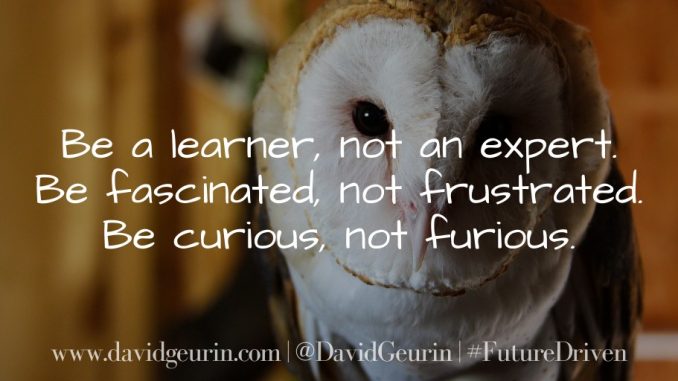
When you lead with curiosity, you shift the entire dynamic of how decisions are made, how teams operate, and how innovation unfolds. Curiosity is not just a personality trait—it’s a strategic posture. It invites exploration rather than assumption, dialogue rather than directive, and learning rather than certainty. In a business world that often prizes control and efficiency, curiosity introduces a different kind of power: the power to see more, to understand better, and to adapt faster.
Curiosity changes the way leaders engage with their teams. Instead of approaching conversations with predetermined answers, curious leaders ask questions that open space for insight. They don’t just want to be right—they want to understand. That shift creates psychological safety, because people feel their perspectives matter. They’re more likely to speak up, to share ideas, and to challenge the status quo. When curiosity is present, meetings become less about reporting and more about discovery. The leader becomes a facilitator of learning rather than a gatekeeper of decisions.
This approach also transforms how problems are solved. Leading with curiosity means resisting the urge to jump to conclusions. It means pausing to ask, “What’s really going on here?” That pause can reveal root causes that would otherwise be missed. It can surface tensions, patterns, or opportunities that are hidden beneath the surface. In complex environments, where problems rarely have simple solutions, curiosity becomes a critical tool. It helps leaders navigate ambiguity with humility and clarity.
Curiosity fosters innovation because it encourages experimentation. When leaders are curious, they’re more willing to test ideas, explore alternatives, and embrace failure as part of the process. They don’t demand perfection—they seek progress. That mindset creates a culture where creativity can thrive. Teams feel free to take risks, to iterate, and to learn from what doesn’t work. Innovation becomes less about big bets and more about continuous exploration. Companies like IDEO and Pixar have built their reputations on this kind of curiosity-driven culture, where questions are valued as much as answers.
Externally, curiosity enhances customer relationships. When businesses lead with curiosity, they don’t just sell—they seek to understand. They ask what customers are trying to achieve, what frustrates them, and what delights them. That understanding leads to products and services that feel intuitive and personal. It also builds trust, because customers sense that the company is genuinely interested in their experience. Curiosity turns transactions into relationships, and relationships into loyalty.
Curiosity also strengthens strategy. Traditional strategic planning often relies on static models and historical data. But when leaders approach strategy with curiosity, they treat it as a living process. They ask what’s changing, what’s emerging, and what’s being overlooked. They engage with diverse perspectives, challenge assumptions, and remain open to surprise. That openness makes strategy more adaptive and more resilient. It allows businesses to respond to shifts in the market with agility and insight, rather than rigidity and delay.
Importantly, leading with curiosity requires emotional intelligence. It means being comfortable with not knowing, with being wrong, and with being challenged. It means listening deeply, not just to words but to tone, context, and intent. Curious leaders don’t just ask questions—they create space for answers to emerge. They don’t interrogate—they invite. That kind of presence builds connection and credibility. It shows that the leader is not just interested in outcomes, but in people.
Curiosity also has a ripple effect. When leaders model it, others follow. It becomes part of the culture, shaping how teams interact, how decisions are made, and how growth happens. It encourages a mindset of continuous improvement, where learning is valued over perfection. That mindset is especially powerful in fast-moving industries, where yesterday’s expertise can quickly become obsolete. Curiosity keeps organizations fresh, relevant, and ready.
There’s a quiet strength in leading with curiosity. It doesn’t demand attention, but it earns respect. It doesn’t claim certainty, but it builds wisdom. And it doesn’t rush to act, but it moves with intention. In a world that often rewards speed and decisiveness, curiosity offers a different kind of leadership—one that’s thoughtful, inclusive, and deeply effective. It reminds us that the best leaders are not those who know everything, but those who are willing to learn anything.
Ultimately, when you lead with curiosity, you create a business that’s not just smart, but alive. You foster a culture where questions are welcome, where growth is continuous, and where people feel seen. You build strategies that adapt, relationships that endure, and innovations that matter. And in doing so, you don’t just lead—you inspire. Because curiosity isn’t just a way of thinking—it’s a way of being. And when it’s at the heart of leadership, everything becomes possible.